
How the Appeals Process Works
An appeal is a request to look again at a decision your RTO made, such as an assessment result, an RPL or credit transfer decision, or the outcome of a complaint. If someone is unhappy about something other than a decision, it’s a complaint. See Manage and Resolve Complaints.
RTOSafe keeps each student appeal in one record, from the first contact to the final decision, so you have a clear, dated account of how it was handled.
Related to Standards for RTOs 2025, Standard 2.8: effective appeal processes are available to VET students.
Why It Matters
Standard 2.8 requires that effective appeal processes are available to VET students where decisions of the RTO or a third party adversely affect the student. The RTO demonstrates this by operating an appeals management system that:
- allows students to appeal decisions of the RTO, any third parties and any person employed or contracted by the RTO, where those decisions adversely affect the student
- ensures all parties to the appeal are afforded procedural fairness
- specifies reasonable timeframes for actioning appeals
- provides avenues for review by an independent party, if requested by the appellant, at no or low cost to the appellant
Information about how to appeal must also be publicly available and easily accessible, outcomes must be documented and communicated to the appellant, and outcomes must be used to inform continuous improvement.
Keeping each appeal in one dated record helps you demonstrate how it was handled at every stage.
The Appeal Journey
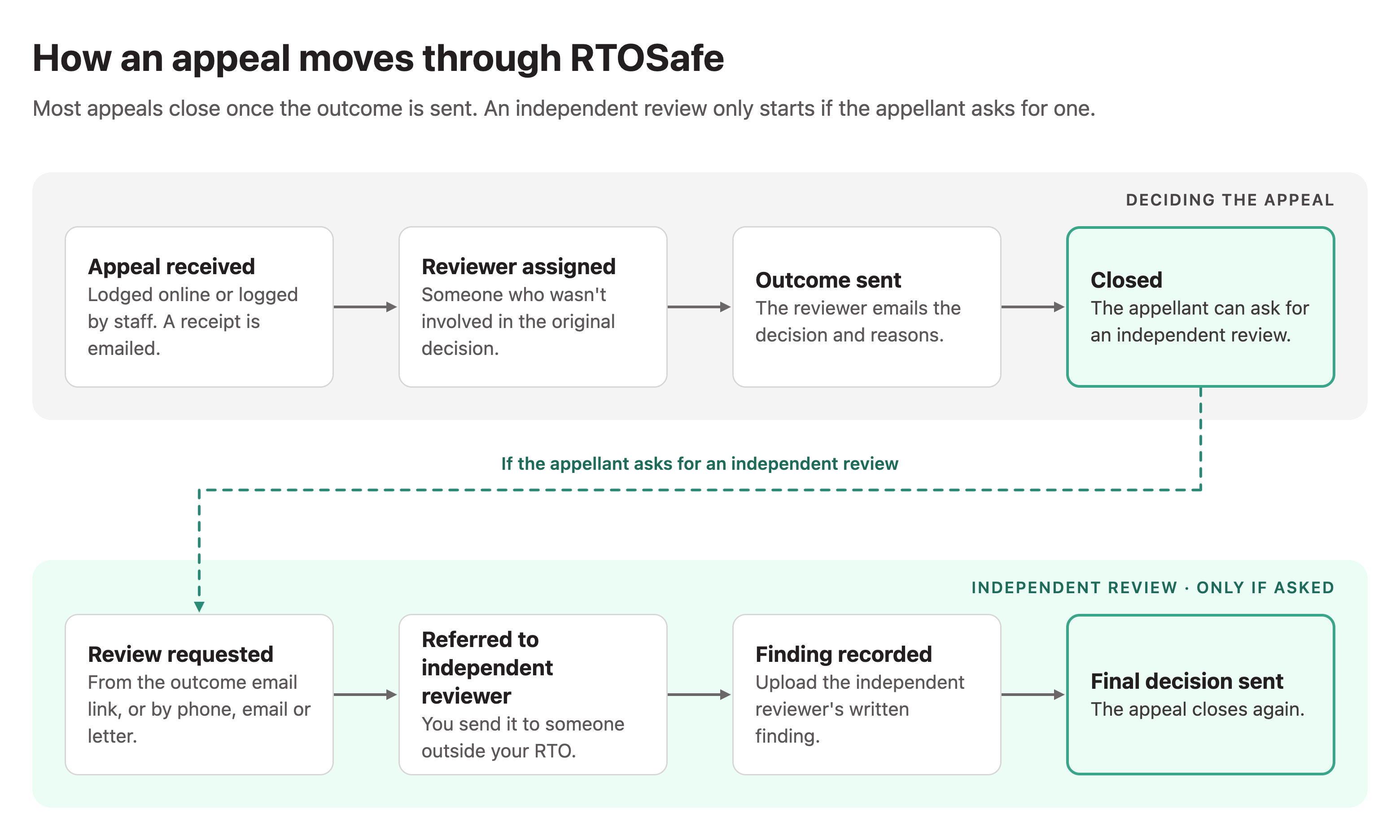
Most appeals take the short path:
- Lodged. The student lodges it on your public form, or a staff member logs it. See Lodge an Appeal.
- Decided. A reviewer who wasn’t involved in the original decision sends the outcome. See Decide an Appeal.
If the appellant isn’t satisfied, they can ask for an independent review:
- Independent review. You refer the appeal to someone outside your RTO.
- Final decision. You record their finding and send your final decision. See Manage an Independent Review.
See It in Action
Click through an appeal’s journey in RTOSafe, from the public form to the outcome.
Who Does What
- The reviewer is the staff member who decides the appeal. They must not have been involved in the original decision.
- The independent reviewer is a person or organisation outside your RTO who reviews the appeal if the appellant asks.
In This Section
- Set Up Your Appeals Process: choose your policy and timeframe, and switch appeals on
- Lodge an Appeal: through your public form or logged by staff
- Decide an Appeal: assign a reviewer and send the outcome
- Manage an Independent Review: refer the appeal and send your final decision
- Keep Track of Appeals: see what’s due and spot anything stuck